Drainage Solutions
A simple drain box is sufficient for 99% of all installations.

A simple drain box is sufficient for 99% of all installations
Some customers worry that water may collect in the bottom of the pit of their in-ground trampoline. The truth is that 99% of our customers have no problems with water. Although water may collect after heavy rain, it usually drains away quickly. The exception is customers with non-porous soil, such as clay, where drainage is much slower.
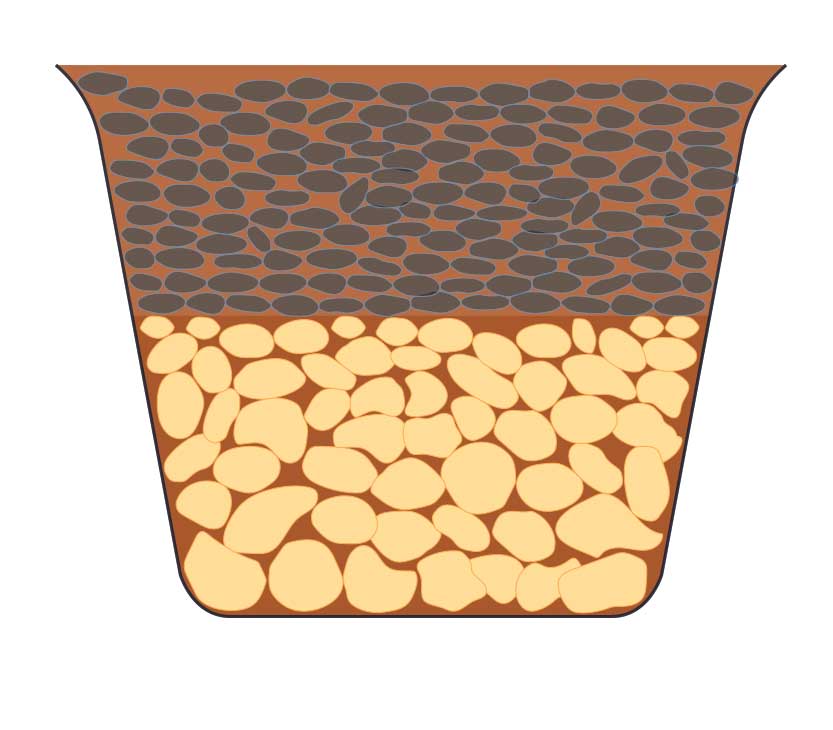
According to the diagram, a drainage box is a pit filled with a combination of stone, shingle or brick that helps rainwater drain away. At the bottom of the pit you dig for the trampoline, make a pit approximately 600 × 600 × 600 mm and fill the bottom with larger pieces of stone or brick and the top with smaller pieces.
All our in-ground trampolines come with full instructions on how to build a drainage box. For further advice, please contact customer service .
If you are concerned about drainage, the first thing to consider is whether you want to be proactive and arrange for drainage at the same time as you install the trampoline.
The other option is to wait and see if you actually have a problem. It’s easy to access the pit after the trampoline is installed – just remove the edge protection and jumping mat. All of the options below can be done afterwards, so often it’s best to wait and see.
That said – if you are concerned or unsure about drainage, it is quick, easy and inexpensive to build a simple drainage box in the bottom of the pit when you install the trampoline:
Option 1: Simple 'as needed' pump solution
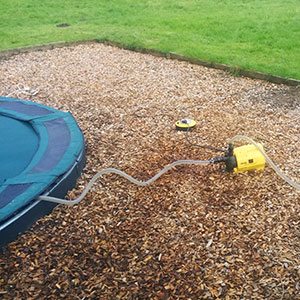
Here you use a simple drainage pump to pump water out of the trampoline when needed, e.g. when the pit fills with water after heavy rain. Connect a temporary power source to the pump (e.g. via an extension cord from the nearest outlet), plug in the pump, place the suction hose in the pit and route the drain hose to another area of the garden. Then start the pump. The picture shows the process.
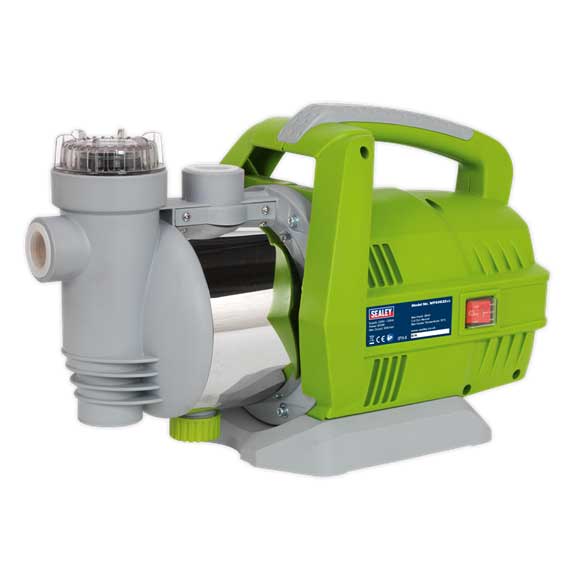
There are many pumps to choose from. Search Google for a complete pump kit with all hoses and accessories. Contact us if you need help choosing the right one.
Option 2: Permanent pump solution
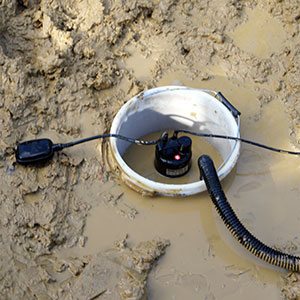
The idea here is to place a 'submersible' pump at the bottom of the pit and connect it to a permanent power supply. You will need to dig a trench for the cable and drain hose (see picture).
You can activate the connection either with a switch in the shed or house (depending on where you have laid the cable) or with a float switch (shown in the picture). The float switch is activated when the water level rises and moves the switch to the vertical position, which starts the pump.
Option 3: Solution with drainage pipes
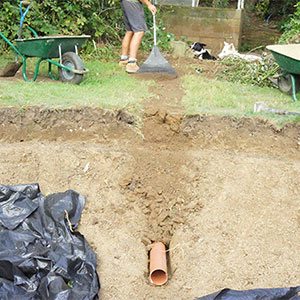
This is only possible if you can lay a 100 mm drainage pipe from the bottom of the pit to a lower point in the garden, e.g. to a ditch.
This is a very good solution that works great. It is easy to install and is not expensive – it provides security and does not require electricity.
Related Articles

Trampoline Safety
Younger children may not yet have the balance and coordination needed for safe jumping. Younger children should always be closely supervised, and many safety experts recommend allowing only one jumper at a time to reduce the risk of collisions.

Which Trampoline Shape?
Know which trampoline shape is right for you.